Developed in 2012 for CDR analysis, PhoneLog has since evolved into an investigative data fusion platform. It supports the examination of phone records alongside field surveys, mobile-device extractions, geolocation data, IP traffic metadata and available interception records, keeping the connection with their original sources.
Import & decodeImport and normalise CDRs, IMSI/IMEI data and other operator files.
CorrelateExamine relationships among subjects, devices, cells and events on a shared timeline.
VisualiseExplore cell usage and possible proximity using map views and other available records.
ExhibitExport reports, timelines and maps with references to the imported sources.
// Data fusion
Data fusion across the available sources.
PhoneLog provides a common investigative workspace for supported CDRs, mobile extractions, network metadata, field measurements, location records and interception event data. Examiners can compare timings, connections and differences without treating a correlation as proof on its own.
PHONE LOGCDR & IMSI/IMEI detail
WIRETAPSPhone intercepts
IP METADATATraffic and network metadata
GEOGPS & location traces
DEVICEMobile-forensics extractions
↓
Correlated records and documented findings, with source references.✓ DATA VALIDATION
// PhoneLog Maps
Cell coverage cannot be reduced to a circle.
The area served by a cell depends on antenna characteristics, frequency, terrain and radio conditions. PhoneLog calculates estimated propagation patterns from available parameters. BTS Tracker field measurements can provide an additional reference.
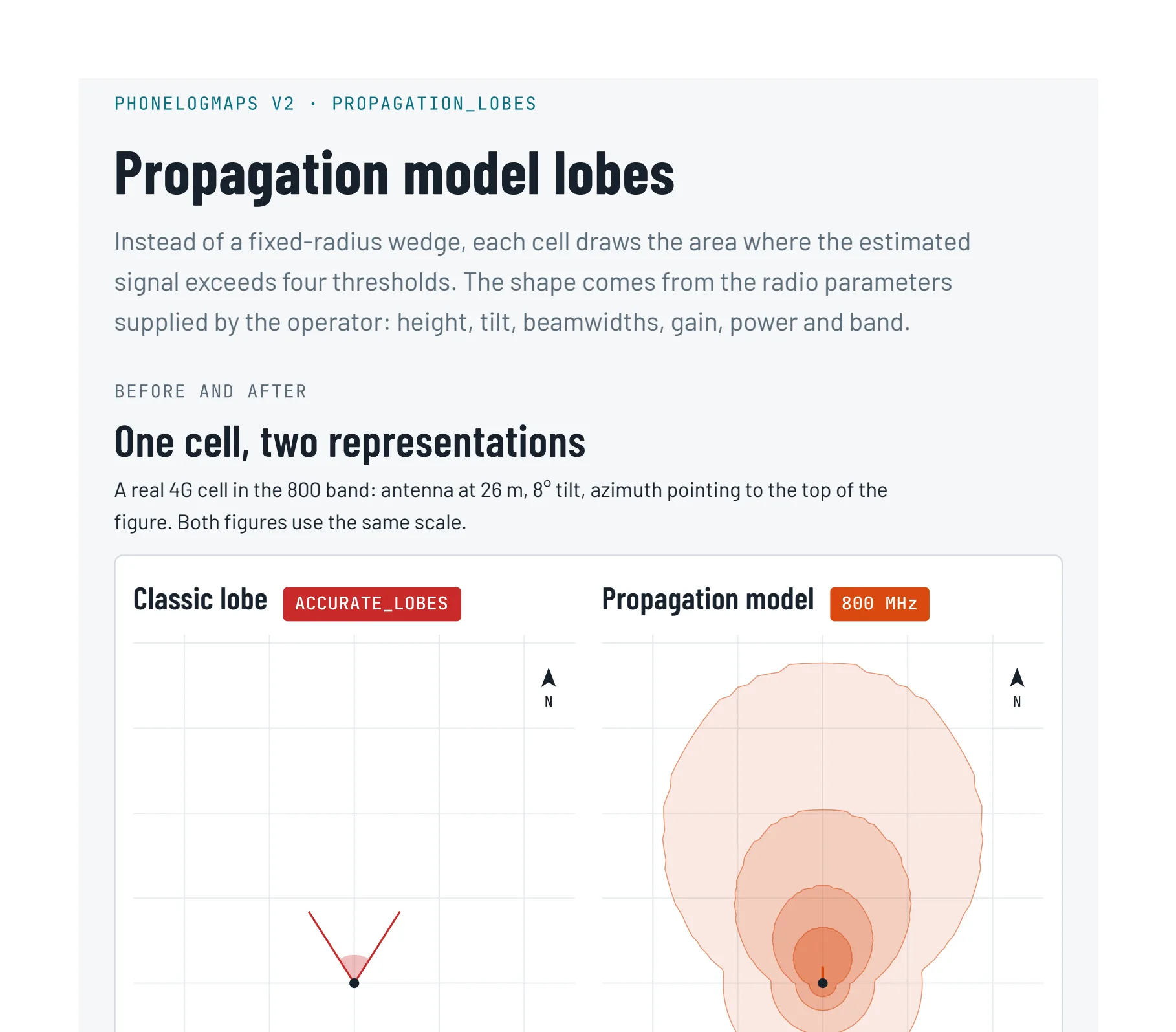
Classic wedge A geometric sector does not account for radio propagation.
Illustrative propagation estimate Estimated coverage at four signal thresholds.
High signalMedium signalLower signalSurvey comparison
VERTICAL GEOMETRY
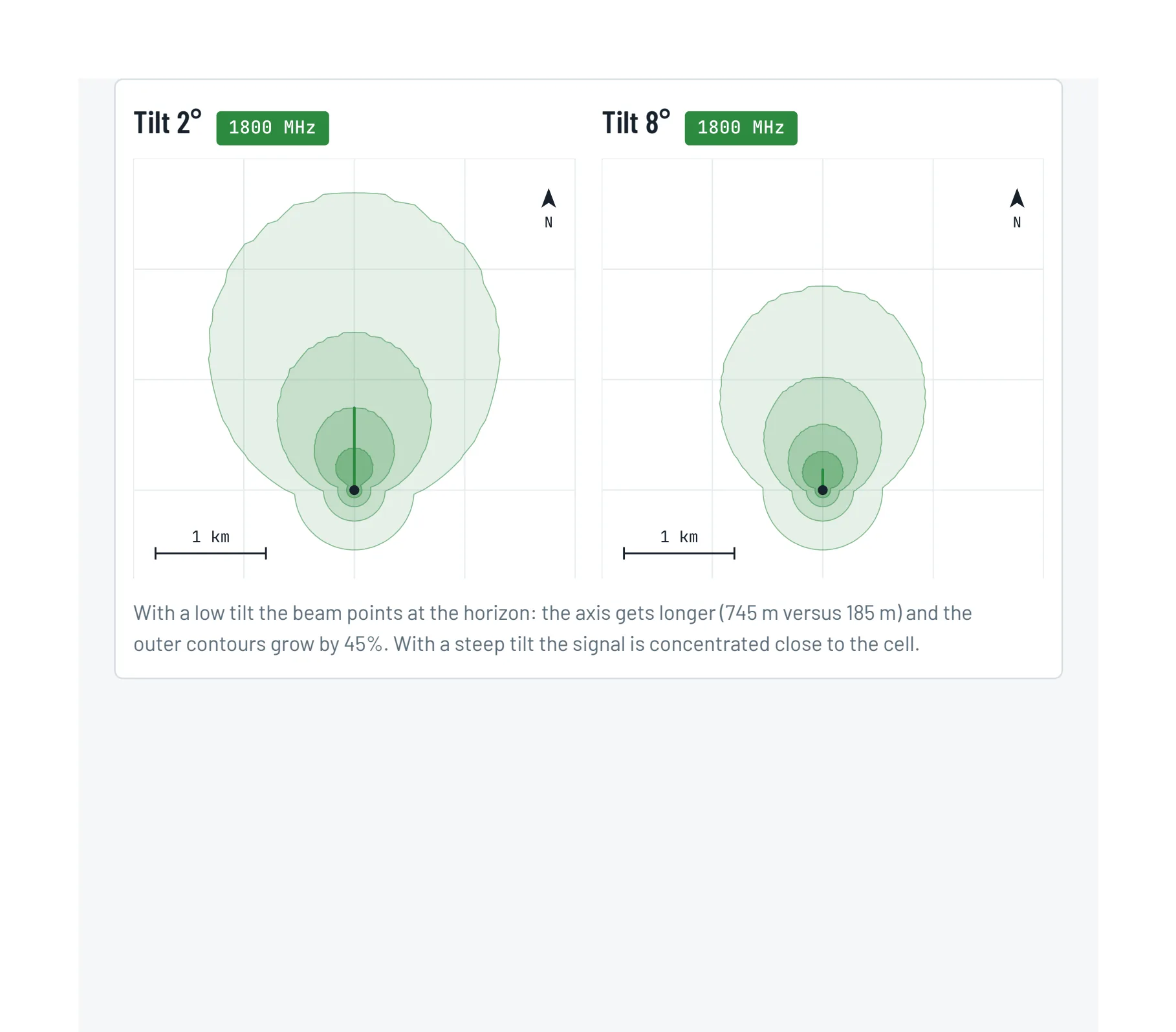
Antenna placement and the local terrain affect the areas represented in a coverage estimate.
FREQUENCY MATTERS
Different radio frequencies can have different coverage characteristics under similar conditions.
LINK BUDGET
Coverage estimates depend on the available network parameters and are not equivalent to direct measurements.
From our technical documentation: the assumed circle vs the computed lobe, antenna height, frequency, link budget.Calculated propagation patterns displayed on terrain.
See how PhoneLog handles your data.
Contact our team for a demonstration of import, correlation and reporting functions.